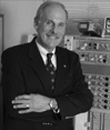
Dr. Steven Schandler
- Education:
- California State University, Stanislaus, Bachelor of Arts
University of Southern California, Master of Arts
University of Southern California, Ph.D.
Video Profile
Biography
Completing his fourth decade at Chapman University, Steven Schandler is the senior Professor of Psychology and Director of the Cognitive Psychophysiology and Addiction Research Laboratories at Chapman University. He received his M.A. in 1974 and Ph.D. in 1976 from the University of Southern California. With over three decades of funding from the National Institutes of Health, the Department of Veterans Affairs and the Alcohol Beverage Medical Research foundation, Professor Schandler has directed a program that examines the interplay of brain and behavior in humans. As a cognitive psychophysiologist, Professor Schandler uses behavioral, physiological, and brain imaging measures to evaluate the brain’s ability to process information while healthy and after deterioration or damage due to aging, substance abuse, or injury. Professor Schandler is a recipient of the Hua-Cheng Wang/Fradkin Distinguished Professorship and twice recipient of the Valerie Scudder Award for outstanding faculty achievement in scholarship and teaching.
Department Faculty Activities:
- Professor of Psychology
- Director, Cognitive Psychophysiology Laboratoies
- Director, Behavioral Sciences Computing Center
- Undergraduate student advisor specializing in the advisement of transfer students and students seeking doctoral-level graduate studies.
Teaching Emphases:
General Core - Psychological foundations; statistics, research methods
Process – learning, perception, cognition/neuroscience, physiological psychology
Applied – psychopharmacology, psychological testing, research internships
Research and Professional Emphases:
Etiology and epidemiology of alcohol and substance abuse
Cognitive reorganization and accommodation associated with aging
Cognitive rehabilitation of persons with central nervous system damage
Compliance and Accreditation of Human Research Protection Programs
Current Grants:
"Age-Dependent Changes in Motor Learning Capabilities", National Institute on Aging. Four years.
"Alcohol Normalization of Stimulus Augmentation in Adult Children of Alcoholics, Alcool Beverage Medical Research Foundation. Two years.
Awards:
Faculty of the Year, Gamma Beta Phi National Honors Society.
Faculty Scholar Award, Delta Gamma National Sorority.
Hua-Cheng Wang Distinguished Fellow, Chapman University. Endowed award for exceptional contribution to the University and to the professional discipline.
Valerie Scudder Distinguished Faculty Award, 1999, 2005, Chapman University. Awarded by the Provost and President on recommendation of the Faculty for excellence in teaching, scholarship, and service to the students and the University.
Faculty Excellence Award - Research and Scholarly Achievement. Chapman University. Awarded by the Provost and the President on recommendation of the Faculty.
Certificate of Appreciation, Department of Veterans Affairs. In recognition of outstanding service and contribution to creating a positive and compassionate environment for patients and staff.
Special Contribution Awards, Veterans Affairs Long Beach Healthcare System Commendation for successfully chairing a task force for improving the delivery of alcohol and substance abuse treatment to spinal cord injured patients.
Professional Memberships:American Association for the Advancement of Science American Psychological Association:
Division 1; General
Division 3; Experimental (invited)
Division 26; History of Psychology
Division 28; Psychopharmacology and Substance Abuse
American Psychological Society
Western Psychological Association
Sigma Xi
Courses Regularly Offered:
- Introduction to Psychology
- Critical Thinking
- History and Systems of Psychology
- Statistics and Research Methods
- Learning; Perception; Cognition
- Physiological Psychology
- Psychopharmacology
- Psychological Measurement and Testing
- Senior Thesis
Philosophy:
Of all the constructs, concepts, and processes that I teach at Chapman, the teaching of research methods provides me with the greatest satisfaction. To research is to systematically pit one's mental resources against the unknowns or poorly knowns of the universe. It is an active process of thinking which one chooses to do when one decides that they will no longer passively accept things as they are; when one decides that they, not the universe, will direct their course through life.